
Harnessing Rainwater in Somalia: Innovative Pathways to Combat Water Scarcity, Desertification, and Arid Land Degradation
By Dr. Daud M. Ismail (Daud Mathey)
21st February 2026
Introduction
Water scarcity remains one of Somalia’s most pressing humanitarian and development challenges. Despite seasonal rains during the Gu and Deyr seasons, much of this rainfall is lost to evaporation and runoff due to inadequate storage infrastructure. Consequently, millions rely on costly emergency water trucking.
Rainwater harvesting (RWH) offers a climate-resilient and scalable solution. Globally, RWH enhances water security, agricultural productivity, and community resilience. For Somalia, it provides an opportunity to shift from emergency response to sustainable development.
Climatic Context
Somalia is largely arid and semi-arid, with rainfall ranging from 100 mm in desert areas to 800 mm in highlands. Increasing climate variability has intensified drought cycles, groundwater depletion, desertification, and displacement.
Key Rainwater Harvesting Approaches
Sand Dams
Sand dams trap water within seasonal riverbeds, reducing evaporation and recharging aquifers. Once mature, they provide year-round water for domestic use, livestock, and irrigation.
Earth Dams
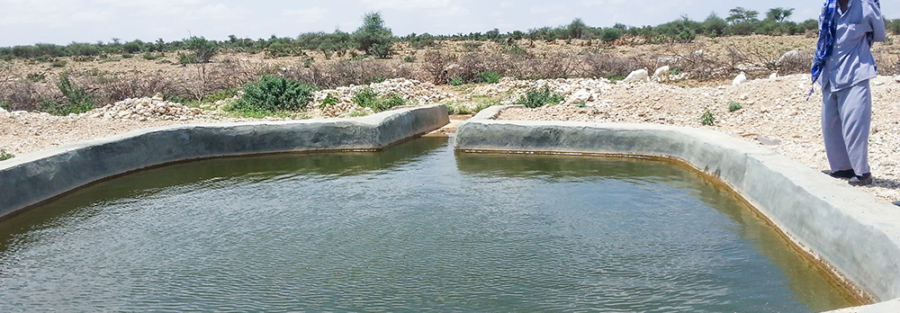
Earth dams store surface runoff and provide water months after rainy seasons. They support villages, recharge groundwater, and reduce soil erosion.
Surface Runoff Catchments
These systems collect rainwater from slopes and roads into reservoirs for irrigation and livestock. Tree planting around catchments reduces evaporation.
Rooftop Harvesting
Rooftop systems collect rainwater into tanks for schools, hospitals, and households. They reduce groundwater pressure and mitigate urban flooding.
Moon-Shaped Micro-Catchments
These shallow earth structures capture rainfall around vegetation, enhancing soil moisture and restoring grazing lands.
Traditional Berkads
Modernized berkads can sustainably supply domestic and livestock water year-round when well maintained.
Emerging Innovations
Atmospheric Water Generators extract potable water from air, particularly suitable for humid coastal towns.
Solar-powered smart irrigation systems improve water efficiency for agriculture.
Superhydrophobic sand mulching reduces evaporation and enhances soil water retention in arid regions.
Transformational Impacts
Rainwater harvesting restores degraded lands, creates employment opportunities, strengthens livestock and agriculture value chains, promotes gender equality by reducing water collection burdens, improves public health, and enhances climate resilience.
Public–Private Partnerships
Institutionalized PPPs can strengthen scalability. Government provides regulation and oversight while private actors bring technical expertise and investment capital. This approach fosters sustainable infrastructure and job creation.
Policy Recommendations
Integrate RWH into national strategies; scale sand and earth dams; mandate rooftop harvesting in public institutions; expand micro-catchments; pilot innovative technologies; strengthen community ownership; and promote multi-stakeholder partnerships.
Conclusion
Rainwater harvesting is not only a climate adaptation strategy but a strategic development investment. By combining traditional and innovative approaches and fostering PPP collaboration, Somalia can transform water scarcity into resilience, economic opportunity, and sustainable progress.